In this article
- Does Insurance Cover Hearing Aids?
- The quick answer
- How much do hearing aids cost?
- Does Medicare cover hearing aids?
- Does private health insurance cover hearing aids?
- Are OTC hearing aids covered by insurance?
- Does Medicaid cover hearing aids?
- Hearing aids for veterans
- Can I use my HSA or FSA for hearing aids?
- More ways to save
- FAQ
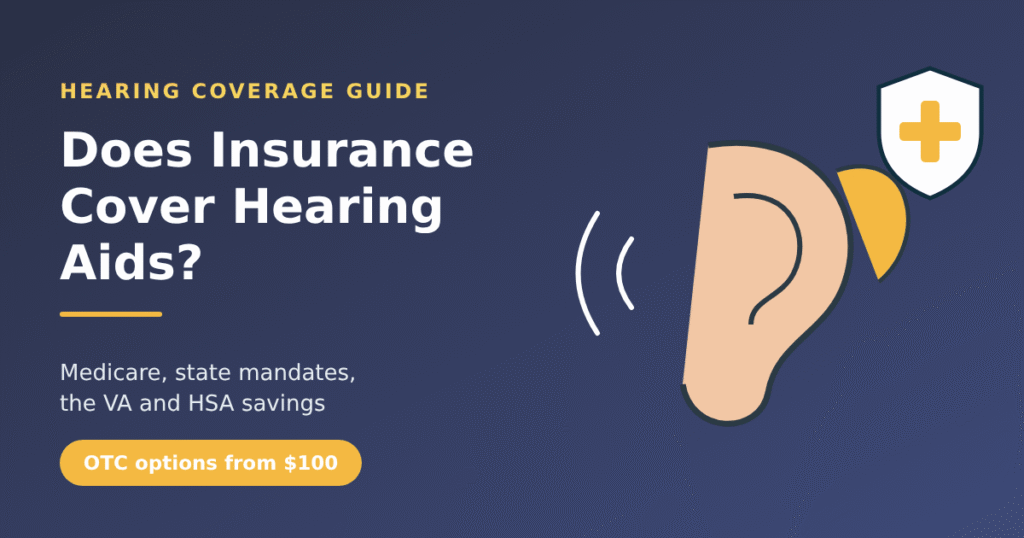
Does Insurance Cover Hearing Aids?
You turn up the TV a little louder every month. You nod along at dinner even when you didn’t catch the joke. Then your audiologist confirms it: you’d benefit from hearing aids. Next comes the price tag, and it can be a shock.
Hearing aids are one of the most common health devices people pay for themselves. But “most insurance doesn’t cover them” isn’t the whole truth. Depending on your age, your state and your plan, you may be able to get a big chunk of the cost covered. Here’s where to look.
The quick answer
- Original Medicare: doesn’t cover hearing aids or routine hearing exams for fitting them.
- Medicare Advantage: most plans include some hearing benefit, usually a capped allowance.
- Private insurance: often limited or excluded, unless your state requires coverage or your employer adds it.
- Medicaid: covers children in every state and adults in some states.
- VA: free hearing aids for eligible veterans.
How much do hearing aids cost?
Prices range widely depending on the technology and where you buy:
| Where you buy | Typical price per pair |
|---|---|
| Over-the-counter (OTC) hearing aids | About $100 to $2,000+ |
| Costco and warehouse stores | Starting around $1,600 |
| Average across all buyers | About $2,700 |
| Traditional audiology clinic, no insurance | About $4,700 |
Figures are from HearingTracker’s consumer survey (HearingTracker). Clinic prices usually bundle the fitting, follow-up adjustments and sometimes a warranty, which is part of why they cost more.
Most people replace hearing aids every four to seven years, so it’s a recurring cost worth planning for.
Does Medicare cover hearing aids?
Original Medicare (Parts A and B) does not pay for hearing aids or the exams used to fit them. Part B does cover diagnostic hearing and balance exams when you need them to diagnose a medical problem (Medicare.gov). Medigap plans don’t add hearing aid coverage either.
Medicare Advantage is where most seniors find help. Most plans offer a hearing benefit, usually through a partner network like TruHearing or NationsHearing. The benefit often looks like one of these:
- A set copay per hearing aid from a list of models
- A dollar allowance per ear every one to three years
- A yearly hearing exam at no cost
Allowances vary a lot from plan to plan, and they rarely cover a premium device in full. Medicare open enrollment runs until December 7, 2026, so this is the time to compare hearing benefits if you’re shopping for a 2027 plan.
Does private health insurance cover hearing aids?
Many employer and marketplace plans exclude hearing aids or cap the benefit at a low amount. But that’s changing in some places.
State mandates. Nine states require certain private plans to cover hearing aids for adults: Arkansas, Connecticut, Illinois, Maine, Minnesota, New Hampshire, Rhode Island, Vermont and Washington. Many more states require coverage for children (HearingTracker). These laws usually set a dollar limit and a replacement schedule, such as one hearing aid per ear every three years.
Keep in mind that state mandates usually apply only to state-regulated plans. Many large employers have self-funded plans that follow federal rules and don’t have to follow state mandates.
Hearing discount programs. Even when hearing aids aren’t covered, many insurers offer member discounts through a hearing network. Look in your member portal under “extra benefits” or “discounts.”
Are OTC hearing aids covered by insurance?
Since October 2022, adults with perceived mild to moderate hearing loss can buy FDA-regulated hearing aids over the counter, without a prescription or exam (FDA). That’s made hearing help far more affordable.
Most health plans don’t pay for OTC hearing aids, because their benefits are built around prescription devices fitted by a professional. Some Medicare Advantage plans let you use an OTC allowance or flex card on them, so check your plan’s catalog.
If you have more severe hearing loss, trouble understanding speech even with volume up, or hearing loss in only one ear, see an audiologist or doctor before buying OTC.
Does Medicaid cover hearing aids?
Medicaid covers hearing aids for children in every state through its children’s health benefit. Coverage for adults depends on your state; some cover hearing aids fully, some partly and some not at all. Contact your state Medicaid office or check its covered services list.
Hearing aids for veterans
If you’re enrolled in VA health care, you can get hearing exams and hearing aids at no cost when they’re clinically needed, along with batteries and repairs. You’ll need to register with your local VA medical center and request an audiology appointment.
Can I use my HSA or FSA for hearing aids?
Yes. Hearing aids, batteries and repairs are qualified medical expenses (IRS Publication 502). That includes OTC hearing aids. Paying with HSA or FSA money means you’re using pre-tax dollars, which can save you hundreds on a pair.
In 2027 you can put up to $4,500 into an HSA for yourself or $9,000 for a family. Since 2026, bronze and catastrophic marketplace plans also qualify for HSAs (IRS).
More ways to save
- Check every benefit you have: health plan, Medicare Advantage, vision or dental add-ons, and employer discount programs.
- Compare clinic, warehouse and OTC prices for similar technology.
- Ask what’s bundled. Fitting, follow-ups and warranty can be worth paying for, but know what you’re getting.
- Look into assistance programs. Nonprofits, state vocational rehabilitation programs and service clubs like Lions Clubs sometimes help with costs.
- Ask about financing or payment plans at audiology clinics.
FAQ
Does insurance cover hearing aids? Sometimes. Medicare Advantage, Medicaid for children, the VA and plans in states with mandates are the most likely to help. Many private plans don’t.
Does Medicare cover hearing aids in 2027? Original Medicare doesn’t. Many Medicare Advantage plans include a capped hearing aid benefit.
Are OTC hearing aids covered by insurance? Usually not, though some Medicare Advantage plans offer OTC allowances. You can pay with HSA or FSA money.
Which states require insurance to cover hearing aids for adults? Arkansas, Connecticut, Illinois, Maine, Minnesota, New Hampshire, Rhode Island, Vermont and Washington, according to HearingTracker.
This article is general information, not medical or insurance advice. Check your plan documents and talk with an audiologist about your hearing needs.
Sources: HearingTracker: does Medicare cover hearing aids · Medicare.gov: hearing and balance exams · FDA: OTC hearing aids · IRS Publication 502 · IRS: HSA changes