In this article
- Does Insurance Cover Menopause Hormone Therapy?
- Why more women are asking about HRT now
- What insurance usually covers
- How formulary tiers affect your cost
- Are bioidentical hormones covered?
- Does Medicare cover hormone replacement therapy?
- What about Medicaid?
- States are passing menopause coverage laws
- Non-hormonal treatments
- How to lower your HRT costs
- FAQ
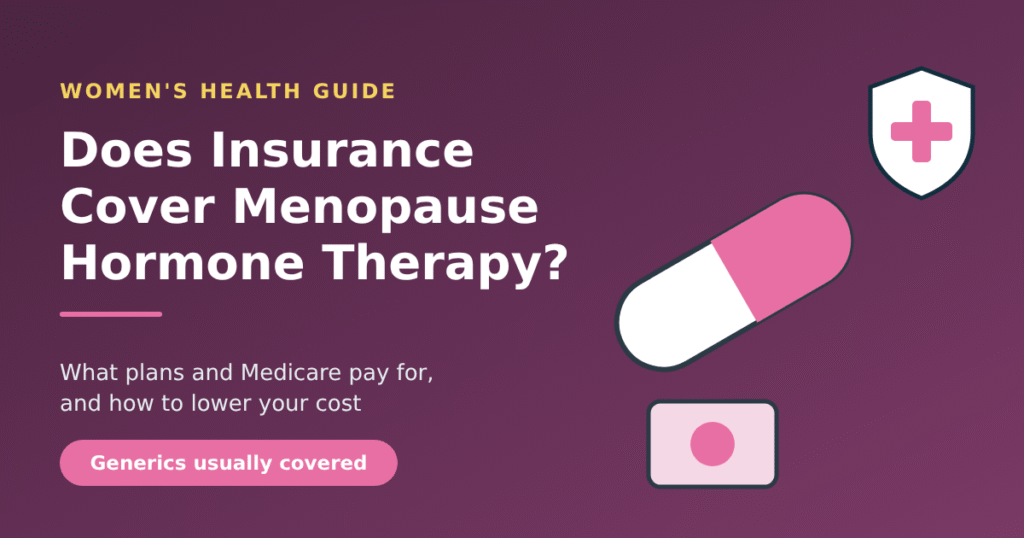
Does Insurance Cover Menopause Hormone Therapy?
Hot flashes at 3 a.m. Brain fog in the middle of a meeting. Mood swings that come out of nowhere. For millions of women, menopause isn’t a footnote; it’s a daily disruption. And after years of confusing headlines, more of them are asking their doctors about hormone therapy.
If you’re one of them, you’re probably wondering what it’ll cost. The good news: most U.S. health plans with drug coverage pay for FDA-approved menopause hormone therapy, often at a low copay. The details, though, depend on the type of hormone, the form it comes in and your plan’s formulary.
Why more women are asking about HRT now
In November 2025, the FDA announced it would remove the “black box” warning, its strongest safety label, from menopause hormone therapy products. That warning had been in place since the early 2000s, after the Women’s Health Initiative study linked hormone therapy to higher risks of heart disease, breast cancer and dementia (Pharmacy Times).
The updated labels drop references to cardiovascular disease, breast cancer and probable dementia. The warning about endometrial cancer stays on estrogen-only products, which is why women with a uterus usually take estrogen together with a progestogen (Axios). The FDA also encourages starting systemic hormone therapy within 10 years of menopause or before age 60 (Becker’s Hospital Review).
The label change doesn’t directly change your insurance, but it has pushed more women and doctors to talk about treatment, and that makes coverage questions more urgent.
What insurance usually covers
If your plan includes prescription drug coverage, it almost always covers at least some FDA-approved hormone therapy. Commonly covered options include:
- Estradiol pills (generic Estrace)
- Estradiol patches, such as generic Climara or Vivelle-Dot
- Estradiol gels and sprays (often a higher tier)
- Micronized progesterone (generic Prometrium)
- Combination estrogen-progestin products
- Vaginal estrogen creams, tablets and rings for vaginal dryness and urinary symptoms
You’ll also usually get coverage for the doctor’s visit and any related lab work, subject to your normal copay or deductible.
How formulary tiers affect your cost
Your cost depends on where a drug sits on your plan’s formulary, the list of covered drugs. Generics are usually on the cheapest tier, while brand-name products cost more and may need extra approval.
| Type of therapy | Typical coverage |
|---|---|
| Generic oral estradiol | Usually covered on a low tier |
| Generic micronized progesterone | Usually covered on a low tier |
| Estradiol patch | Often covered; some plans require trying pills first |
| Brand-name products | Higher copay; may need prior authorization or step therapy |
| Vaginal estrogen | Usually covered; brand-name versions can be pricey |
| Compounded “bioidentical” hormones | Usually not covered |
| Hormone pellets | Usually not covered |
Step therapy means your plan wants you to try a cheaper drug before it’ll pay for a more expensive one. If your doctor thinks a patch is safer for you than a pill, for example because of your clot risk, they can ask for an exception.
Are bioidentical hormones covered?
It depends what “bioidentical” means in your case. The term simply means hormones chemically identical to the ones your body makes.
- FDA-approved bioidentical hormones, like estradiol patches and micronized progesterone, are often covered.
- Compounded bioidentical hormones, custom creams, troches and pellets mixed by a compounding pharmacy, are usually not covered. They aren’t FDA-approved, and medical groups generally recommend FDA-approved products when they meet your needs.
If a clinic pushes custom-compounded hormones or pellets that cost hundreds of dollars out of pocket, ask whether an FDA-approved version would work for you instead.
Does Medicare cover hormone replacement therapy?
Original Medicare (Parts A and B) covers your doctor visits but not most take-home prescriptions. Hormone therapy is covered through Medicare Part D or a Medicare Advantage plan with drug coverage. Generic estradiol and progesterone are on nearly all Part D formularies; compounded hormones generally aren’t covered.
Part D also caps your yearly out-of-pocket drug spending: $2,400 in 2027 (PBS). Medicare open enrollment runs until December 7, 2026, so it’s a good time to check whether your plan covers the specific product you use.
What about Medicaid?
Most state Medicaid programs cover generic FDA-approved estrogen and progesterone, though rules and prior authorization requirements vary by state. Contact your state Medicaid agency or check its drug list.
States are passing menopause coverage laws
A growing number of states are requiring insurers to cover menopause care. Louisiana passed a law requiring Medicaid and private plans to cover menopause and perimenopause treatment (InsuranceNewsNet), and Illinois enacted a law covering hormone therapy for menopause (McDermott Will & Emery). Other states have similar bills.
Keep in mind that state laws usually apply only to state-regulated plans. Many large employers have self-funded plans that follow federal rules instead.
Non-hormonal treatments
If you can’t or don’t want to take hormones, newer non-hormonal drugs for hot flashes, such as Veozah and Lynkuet, are available. They’re brand-name and often expensive, so expect prior authorization and possibly a higher copay.
How to lower your HRT costs
- Ask for generics first. Generic estradiol and progesterone are usually the cheapest.
- Check your formulary before your appointment so your doctor can pick a covered product.
- Use 90-day mail-order fills, which often cost less per month.
- Request an exception if you need a specific product for medical reasons.
- Compare cash prices with discount cards; generics can sometimes cost less than your copay.
- Use your HSA or FSA for copays and prescriptions.
FAQ
Does insurance cover HRT for menopause? Most plans with drug coverage cover FDA-approved hormone therapy, especially generics.
Does Medicare cover hormone replacement therapy? Yes, through Part D or a Medicare Advantage plan with drug coverage, not Original Medicare alone.
Are bioidentical hormones covered by insurance? FDA-approved ones often are. Compounded hormones and pellets usually aren’t.
Did the FDA remove the black box warning on HRT? Yes. In November 2025, the FDA announced it was removing most boxed warnings, keeping the endometrial cancer warning for estrogen-only products.
This article is general information, not medical or insurance advice. Talk with your doctor about whether hormone therapy is right for you, and confirm coverage with your plan.
Sources: Pharmacy Times: FDA removes boxed warning · Axios: FDA scraps black box warning · Becker’s Hospital Review · PBS: Medicare changes for 2027 · InsuranceNewsNet: Louisiana menopause law · McDermott: Illinois HRT law